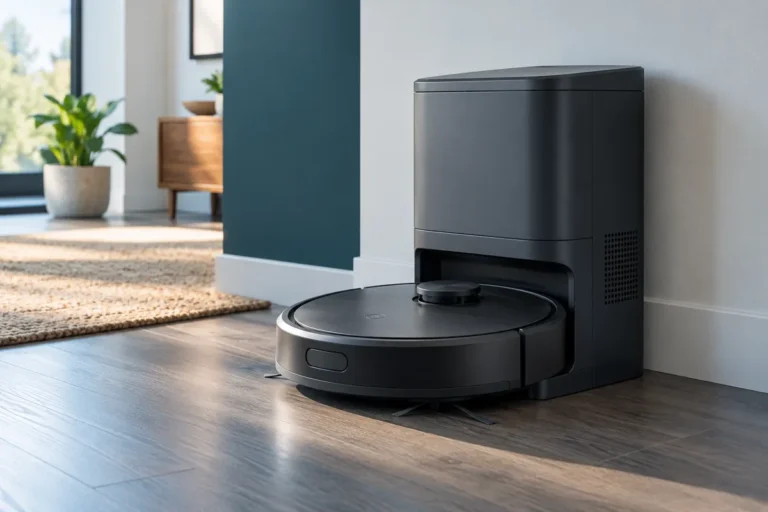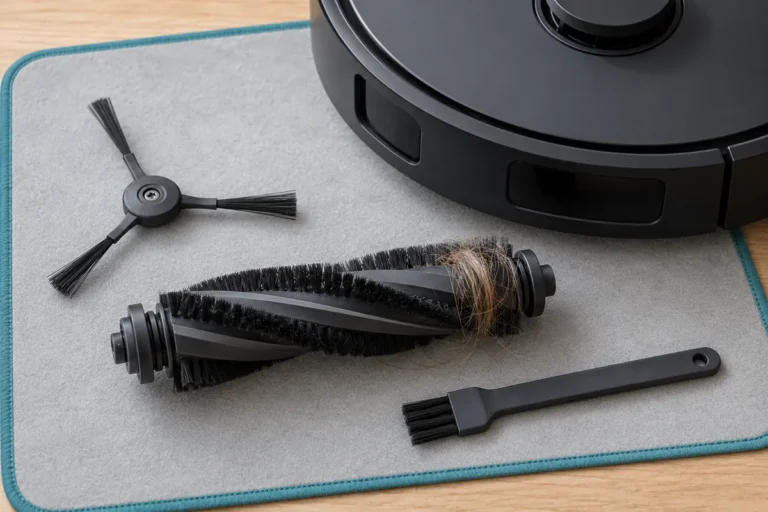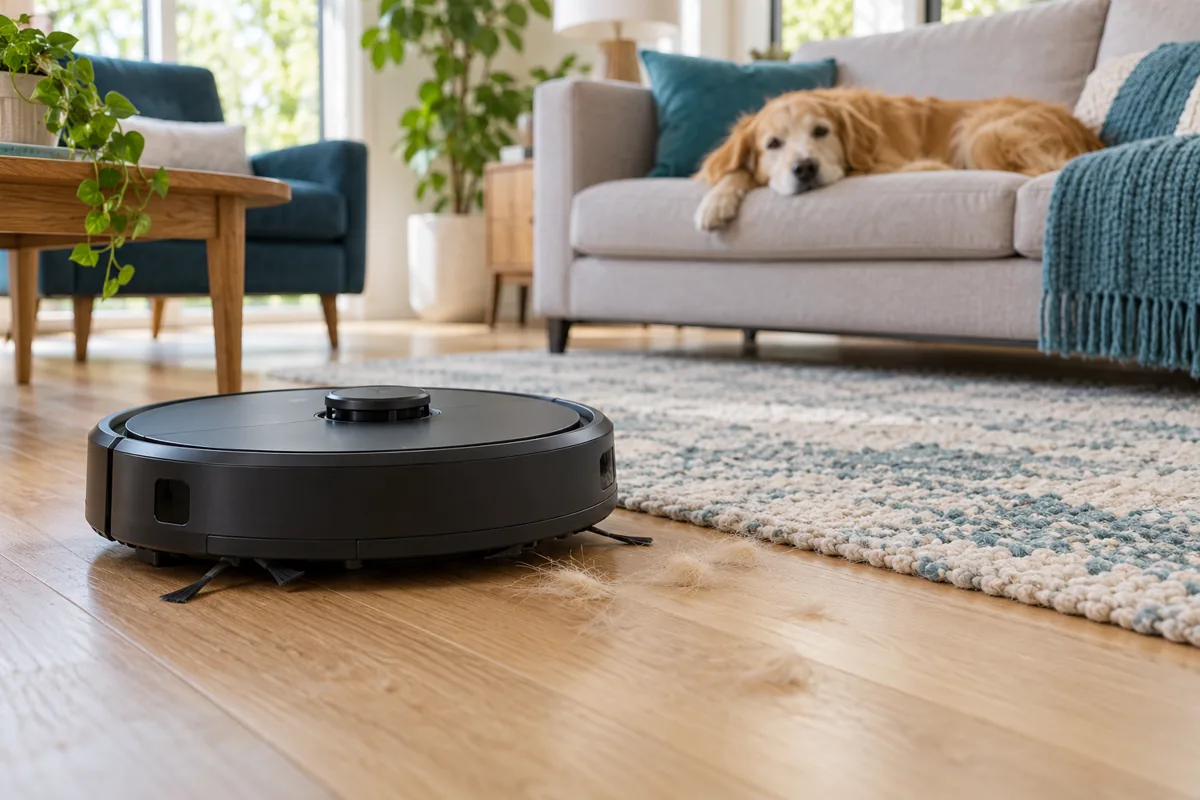
Cover: AI-generated editorial illustration of generic hardware, not a photograph of the models discussed.
Research-based guide, not a hands-on test. Manufacturer information is linked where used. Recommendations are editorial judgments, not measured pickup results. Sources checked October 25, 2026.
The right robot vacuum for pet hair depends on your floors, the fur it must collect and the maintenance you will actually do.
Start with the hair and the floor
Write down where fur causes the most work: open hard floors, the rug beside a sofa, a pet bed, or several rooms. A robot that cannot reach that area offers little value, however impressive its specifications look. Stairs, upholstery and a raised pet bed still need a separate cleaning method.
For rugs, look for independent tests on a similar surface and check the manufacturer’s restrictions. A smooth-floor demonstration does not establish how a machine handles hair embedded in your carpet. Long human hair in the same home is another reason to inspect how the roller ends can be reached.
| Your main problem | Give priority to | Verify before buying |
|---|---|---|
| Fur around furniture | Access under and around the furniture | Robot height, narrow gaps and the complete cleaning route |
| Hair on rugs | Brush design and relevant independent evidence | Rug restrictions, tassels and return terms |
| Frequent bin handling | A workable emptying routine | Included dock, consumables and space |
| Hair around rollers | Easy inspection and compatible spare parts | How the brush and end caps are removed |
Brush design matters, but labels need checking
Manufacturers use different approaches to hair management. For example, iRobot describes anti-tangle rubber brushes in its pet-focused range. That describes a design approach, not proof that every Roomba or every competing robot is maintenance-free. Check the exact model’s parts diagram and cleaning instructions.
For a purchase you will keep for years, an accessible roller can be more useful than a feature label you cannot inspect. Our hair-tangle maintenance checklist shows the components to look at and the observations to record.
Two self-emptying examples to investigate
These are research examples with different ownership considerations. We have not tested them against each other and are not ranking either as the best pet-hair cleaner.
Shark AI Ultra AV2511AE: a bagless dock example
Shark lists the AV2511AE with a bagless self-empty base and a 60-day capacity claim. Consider it if avoiding replacement dust bags matters to your routine. You still need to inspect and empty the base; a capacity claim does not predict the interval in your home. Read our existing Shark guide for the model’s trade-offs.
eufy Auto-Empty C10: a low-profile, bagged example
eufy lists the C10 with a 2.85-inch body and a station using a 3-liter dust bag. That makes furniture clearance and bag replacement useful comparison points. Confirm the package: the linked manufacturer page is a bundle with extra bags, and retailer bundles may differ. Its floor pickup has not been tested by Gezmopro.
Decide whether a dock solves your actual problem
A dock addresses bin handling. It does not remove hair wrapped around a wheel or move a cable off the floor. If those are the chores you dislike most, look more closely at brush access and room preparation before paying extra for automation. Use our self-emptying value guide to compare the work that changes.
A short list before you place an order
- Measure the lowest furniture opening and the intended dock location.
- Find the manual for the exact model and identify routine maintenance.
- Confirm the included station and the availability of compatible bags, filters and brushes.
- Check seller identity, item condition, shipping, warranty and returns.
Keep the first few cleaning runs supervised so you can observe your own layout. For a compact home, our small-apartment guide turns these checks into a room plan.
What would change our recommendation?
Documented results on the same floor and hair type, verified obstacle handling, long-term maintenance records and current parts availability would carry more weight than a higher suction number alone. Until we have that evidence, this guide helps you build a shortlist rather than promising a winner.
Sources and scope
- Shark US: AV2511AE product information
- eufy US: C10 and extra-bag bundle
- iRobot US: pet-focused robot features
Manufacturer pages describe their own products. Features and bundles can change. We have not independently verified their cleaning or obstacle-avoidance claims.
Have a correction or a source to add? Contact Gezmopro.